
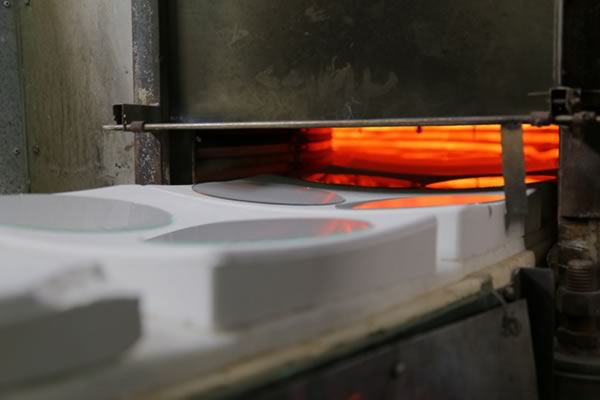
On the glass line, paint drying is anything but passive. If the heat is slow or uneven, you trap solvents, risk adhesion failure, and set yourself up for optical distortion that only shows up after tempering. That means scrap, rework, and a bottleneck that stalls the entire cell. What matters, technically We built the industrial glass paint dryer around short-wave NIR emitters in a quartz envelope, tuned for high emissivity across the coating absorption band. The energy goes where you need it — into the paint, not the glass substrate — so cure is fast and the surface stays controllable. In practice, curing happens in seconds, not minutes, with a stable thermal profile across the full width. The module runs on standard industrial power, drops into existing conveyor clearances, and is engineered for 24/7 duty cycles. Output stays consistent over thousands of hours, with tight control on temperature repeatability. On a high-throughput glass paint line, speed is only worth anything if the finish is right. This dryer cures quickly without hot spots, so you avoid thermal stress and the micro-warp that causes roller marks later. You end up with a uniform dry film, predictable gloss, and adhesion that holds up through cutting, bending, and lamination. Energy use drops because the heat is directed, not dumped into the ambient air and conveyor hardware. On tempering and bending lines that run flat glass through coating, the shorter dwell frees up furnace capacity and tightens pitch. Here are a few things to keep in mind. NIR drying is line-of-sight, so glass geometry and fixture shadows matter. Keep fixtures out of the beam path as much as possible, and keep reflectors clean. Coating formulation also affects cure speed; solvent load and pigment loading can shift the energy you need. Plan a short run-in to dial in power and belt speed, then verify cure with a solvent test and cross-hatch adhesion. Expect shorter lamp lengths than full convection ovens, but confirm your clearance and ventilation requirements before installation.