

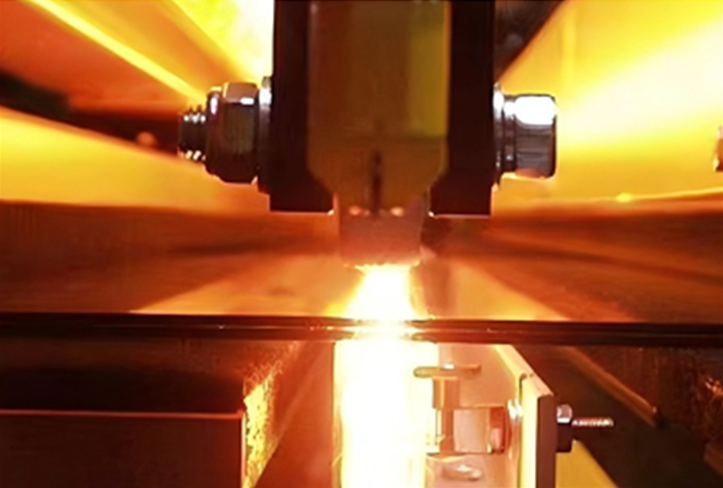
On the line, glass either heats evenly or it fights you—and when it fights, you pay for it in optical distortion, thermal stress cracks, and scrap that eats up cycle time. Whether you’re running tempering, bending, EVA/SGP/PVB lamination, coating drying, or insulating glass sealing, uneven temperature across the furnace zone shows up fast. So we built a gold reflector plate that puts repeatable, controllable heat right where the glass sits. What makes it work It’s a high-emissivity gold coating on a quartz substrate, reflecting infrared energy back onto the load instead of letting it bleed into the chamber walls. That targets the glass surface directly, so you get quicker ramp rates without storing extra heat in the fixtures. It plays with short-wave and medium-wave emitters, and the geometry can be matched to your standard zone layout. After thousands of hours, you still get stable output and a thermal profile that stays consistent shift after shift. And here is why it matters on the floor. In tempering, the plate helps keep heat uniform across the pane. Edge stress drops, and break patterns become more repeatable. In bending, it gives you controlled sag, so you hit the same radius without cooking the center. For lamination and coating drying, it shortens dwell time and shaves peak temperatures. That protects the polymers and interlayers, and you keep the optical quality you need. In insulating glass sealing, it holds the primary seal steady, so the secondary cures without wobble. The payoff is fewer reject sheets, faster cycles, and less energy per square meter. Installation is straightforward, but alignment is everything. Even a small offset will move the hot spot and shift the thermal profile across the glass. Make sure the emitter-to-plate gap and the plate-to-glass distance are dialed into your process window. Keep the gold surface clean, too. Heavy deposits kill reflectivity and drift the setpoint. If you run long hours at high temperature, plan routine inspections. We size the plates to your furnace width and zone power so you can drop them in without re-engineering the line.