

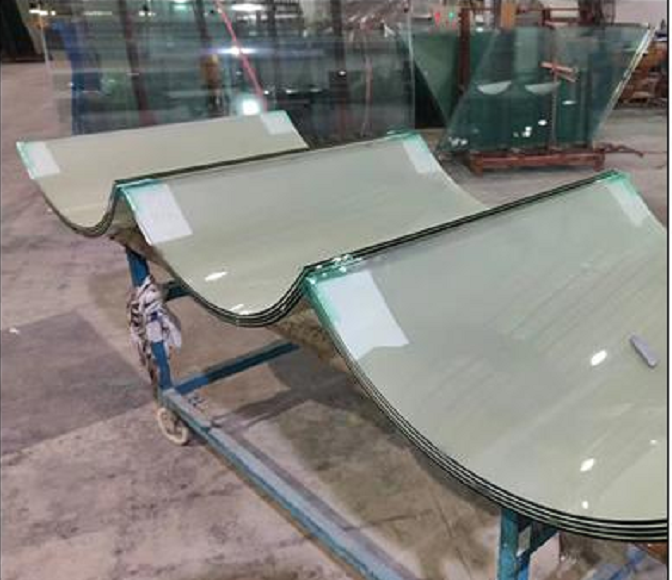
On the glass line, heat is money. When the furnace is pinned wide open for tempering, bending, or lamination, the energy bill jumps and temperature uniformity starts to drift. That drift shows up as optical distortion, edge stress, and scrap. We built a modular infrared heating array to go straight at these runs, swapping out bulky radiant panels and inefficient convection zones for heat you can aim and control. The heart is a compact NIR module that hits high flux density with fast response. Quartz emitters give you clean spectral output, matched to glass emissivity, so the energy lands on the surface and soaks in evenly. Each module is rated for 480 V three-phase and can be ganged in any layout—200 mm, 300 mm, and 400 mm pitches—so you fit the heat zone to the part, not the other way around. Where the process needs it, you can hit peak power densities up to 60 W/cm², but the array only draws when the PLC calls for it. Zone control keeps thermal gradients tight, and that matters when you’re bending windshields or tempering thin cover glass. What does that look like on the floor? Shorter cycles and fewer rejects. The array heats on demand, cutting idle losses and holding soak profiles with repeatable precision. On tempering lines, we’ve seen energy use drop 18–25% compared with older radiant systems, while throughput holds steady. For lamination, the fast ramp cuts pre-press time and keeps the polymer cure window stable. The modular design swaps in and out without rewiring the whole line—downtime drops, uptime climbs. Plan for clean power. The array needs stable voltage and a dedicated ground, and the emitters run hot, so keep clearances and cooling paths exactly as specified. Match the controller to your existing PLC or use ours; either way, set limits on inrush, and you’ll keep the lights on and the glass moving.