


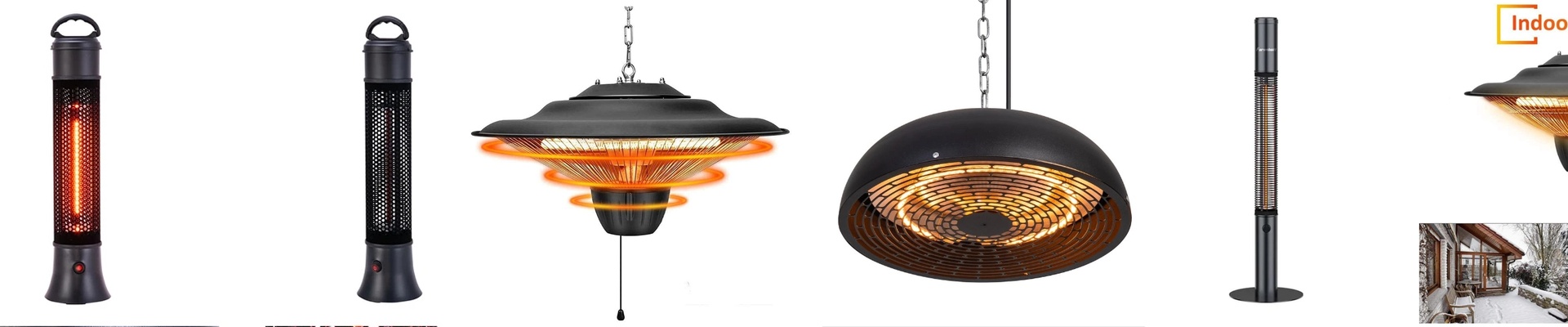
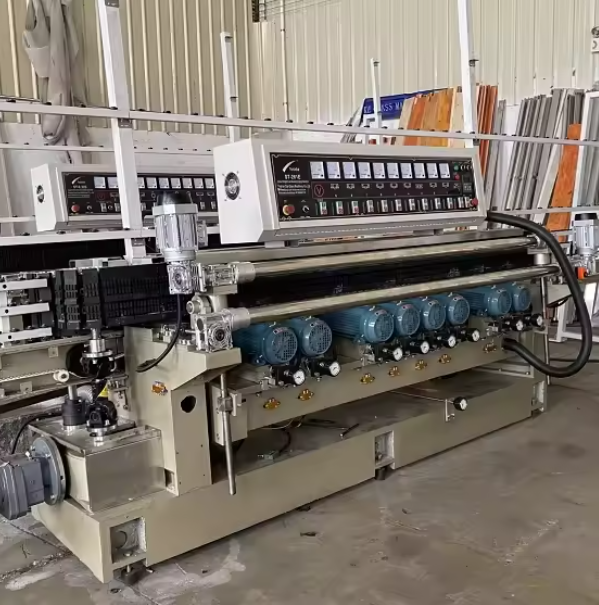
Out on the shop floor, the lehr belt never stops. Tempering lines, bending furnaces, lamination presses—they all wait on temperature. When preheat drags, the whole sequence slips. Glass sits too long, thermal shock risk climbs, and the energy meter runs away at night. We built preheat modules that hit target fast, hold steady, and do it without burning kilowatt-hours you can’t get back.
What matters, technically
Rapid preheating isn’t about raw power. It’s about matching heat input to how the glass actually responds, while keeping the thermal field even across the sheet. We run short-wave infrared (NIR) emitters in a layout that’s engineered for the process, not the brochure. The peak emission sits close to the absorption band of most glass coatings and substrates, so the energy goes into the glass—not the air. That gives you a fast ramp with low inertia, which is exactly what you need for changeovers and short runs. Here’s how the specs show up on the line:
- Power density is tuned to the process window. You get fast ramp rates without driving thermal stress. In practice, that means ambient to preheat setpoint in minutes, not tens of minutes.
- Emitter temperature stability is controlled to keep output consistent. Drift equals uneven heating; we hold the curve so the first sheet and the hundredth look the same.
- The heating zone profile is designed to reduce edge-to-center deltas. Uneven heating comes back later as optical distortion and breakage; our zone control keeps the profile flat across the width.
- It’s modular, so it integrates into existing lines. Fixtures, mounting, and connections match standard machine footprints. The swap is straightforward. Material choices matter because the line doesn’t forgive weak points. Quartz components handle thermal shock and keep output stable. Reflectors are shaped to put energy on the glass, not the frame. This is built for continuous duty, not intermittent lab work.
Why this works in glass processing
Preheat is the gatekeeper for consistent quality. Whether you’re running tempering, bending, lamination, or coating drying, the preheat stage sets the thermal budget for everything that follows. On tempering lines, you need preheat that’s fast and repeatable so furnace dwell stays stable. When preheat is slow, operators compensate by raising furnace temperature. That wastes energy, accelerates heating element wear, and pushes the glass closer to breakage. Fast preheat brings the glass up quickly, shortens the tempering cycle, and reduces the need to overshoot in the furnace. Bending furnaces run on repeatability. If the glass enters with variable temperature, bending tolerances drift. A stable preheat profile cuts scrap from out-of-spec bends and keeps the furnace setpoint honest. Lamination presses demand uniform heating across the stack. EVA, SGP, and PVB each have a tight window where adhesion happens without bubbles or voids. Fast preheat shortens press time and keeps the adhesive chemistry consistent sheet to sheet. Coating lines live and die on controlled drying. Too slow, and the coating sits under heat too long. Too fast, and the solvent bursts. Rapid preheat hits the drying curve quickly, then holds steady—consistent film quality with fewer rejects. Insulating glass sealing lines need the edge band warmed uniformly before the secondary seal. Cold edges give uneven adhesive flow and weak seals. A targeted preheat module brings the edge up to temperature without overheating the glass face. Automotive glass cells often run mixed thicknesses and colors. The preheat system has to respond fast to changeovers. With this approach, ramp time is predictable and the setpoint is repeatable, so the line keeps moving. And the operational gains show up where it counts:
- Energy use drops because heat is delivered on demand, not held in a large mass that bleeds off overnight. Shorten and tighten preheat time, and you see measurable reductions in kWh per square meter.
- Yield improves as thermal shock and stress-induced breakage fall. Uniform preheat reduces the variability that shows up downstream as optical defects and fractures.
- Maintenance costs fall because the system is modular. Instead of replacing a full furnace or overhauling a large heater bank, you swap the emitter module, align the reflector, and get back to production.
What to keep in mind
Rapid preheating performs best when the process, the equipment, and plant conditions are matched. A few field notes:
- Emissivity and the coating stack matter. Low-emissivity coatings and reflective layers change how the glass absorbs energy. We calibrate the emitter spectrum and power density to the glass stack you run. Change the coating chemistry, and you may need to retune the preheat profile.
- Clearance and view factor are not optional. The distance between emitter and glass, and the angle of incidence, drive uniformity. If the mounting geometry is off, belt edges will run cooler than the center. We supply fixed spacing and alignment fixtures to keep the field consistent.
- Temperature measurement has to be representative. Pyrometers and thermal cameras see what’s in their line of sight. Placement matters—measure at the glass surface, not the heater housing. Calibrate for glass emissivity and reflection to avoid false readings.
- Power infrastructure has to match the load. High ramp rates draw current quickly. Check voltage, phase, and wiring to match the module. On three-phase supply, we size the load to balance across phases and avoid hot spots in the distribution panel.
- Expect a short learning curve. Operators used to slower ramps will need to adjust timing and sequence. Once the preheat window is locked in, changeovers get faster and more predictable. There is one trade-off you should own up front: rapid preheating trades lower total energy for higher peak power. That’s acceptable on most lines because the duty cycle is short and the energy saved per shift adds up. Where grid capacity is constrained, we size the system to stay within available capacity and schedule staggered starts across lines. If you want to shorten cycle time, cut scrap, and bring energy use under control, start with preheat. It’s the lever that moves everything downstream.