

Why Fast-Response IR Lamps are the Secret to Continuous Glass Annealing
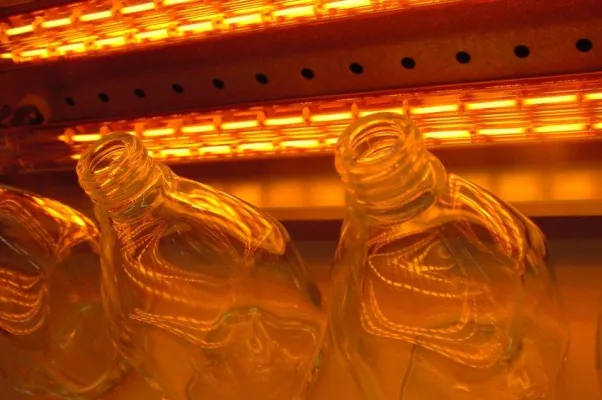
If your thermal profile dips during tempering, you’re asking for trouble. Internal stress builds up, and before you know it, you’ve got glass shattering for no apparent reason. It’s a nightmare. The problem is that old-school ovens are just too slow. They can’t keep up. That’s why we lean on shortwave infrared (IR) lamps. They hit the glass surface almost instantly. It’s the difference between waiting for a room to warm up and stepping into a beam of sunlight. Suddenly, you aren’t stuck with slow batches—you can actually run a continuous production line. The magic of the response time Here is the thing: shortwave IR doesn’t waste time heating up the air around the glass. It uses electromagnetic waves to put the energy directly into the material. When you crank up the line speed, these lamps jump to temperature in seconds. No lag. No awkward temperature drops between sheets. It just works. Getting the heat just right Nobody wants optical distortion. To stop that from happening, we set up arrays of IR tubes so their heat footprints overlap. By tweaking the power density across the width of the glass, you get a nice, flat thermal map. But a heads-up: if you’re pushing high wattages to get more glass through the door, make sure your cooling fans are up to the task. If they can’t handle the radiant heat bleed-off, your lamp housings will start to warp, and that’s a headache you don’t need. Keeping things running We design these systems so you don’t have to be a rocket scientist to fix them. We use standard connectors, so if a tube burns out, you just pull it, pop in a new one, and you’re back in business. No need to tear apart the whole conveyor. Now, there is a catch. This kind of speed eats power. Shortwave systems pull a lot of current, especially during that first ramp-up. Check your electrical panels to make sure they can handle the peak load. If your voltage starts dancing around, you’ll see it in the quality of your glass. Stable power is the only way to get consistent annealing every single time.