
On the line, glass doesn’t break from brute force—it breaks the way fracture physics says it will. You can have a clean score, but if separation turns into a gamble, the usual culprit is uneven heat. One cold spot, one lagging zone, and thermal stress gets unbalanced. That’s when you get micro-cracks, ragged edges, and good glass that should’ve shipped getting scrapped.
What matters under the hood
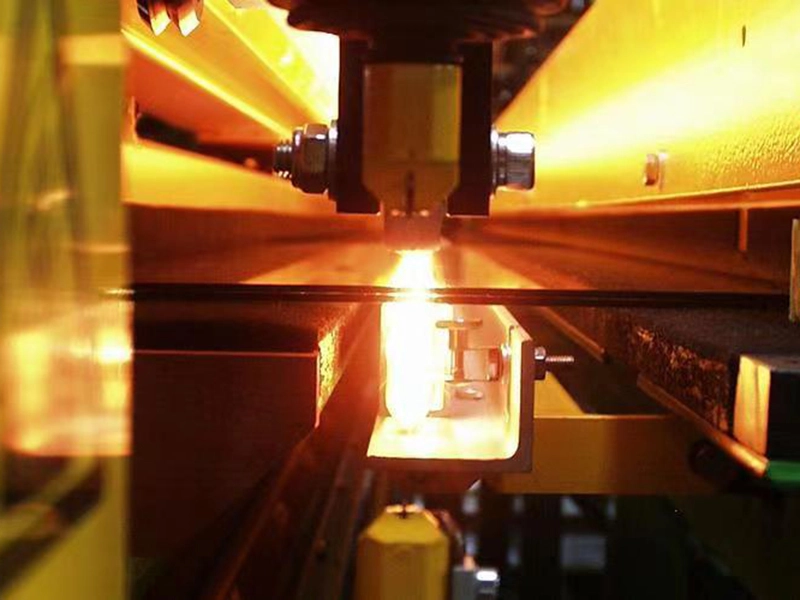
We built the infrared lamp for glass breaking around a short-wave quartz emitter—fast response, high power density. The output is tuned for rapid, localized heating that spikes the surface temperature without trying to soak the whole pane. That creates the sharp thermal gradient you need for predictable fracture propagation along the intended score. A closed-loop control keeps output stable, so the lamp tracks setpoint even when line voltage swings around. Physically, the package is compact enough to fit tight spacing around conveyor rolls and scoring heads, and the terminal layout is laid out to plug into existing machine harnesses without a rewire project.
Why it holds up in real processes
In tempering, the break-out step has to keep pace with furnace throughput. A lamp that hits temperature fast shortens dwell at the break point, so you cut cycle time without chasing higher furnace temperatures. In bending and annealing, controlled local heating helps you avoid warp and reduces the risk of stress concentrations that show up later as spontaneous breakage. For insulating glass, that same precision heating cuts thermal shock near the edge seal, so you get cleaner separation without jeopardizing the secondary seal. Energy use drops because the heat is delivered where it’s needed, when it’s needed—no over-running the whole oven section.
The shop-floor details you can’t skip
Installation is straightforward, but alignment is not optional. The lamp has to match the score line geometry; even a small offset shifts the thermal profile and can push the fracture outside the intended path. The emitter performs best when the target glass emissivity is consistent. Coatings and tinted substrates change absorption, so setpoints may need a small offset. Expect a finite service life at high temperature—plan ahead with spare mounts and quick-connect wiring so replacement doesn’t turn into downtime.