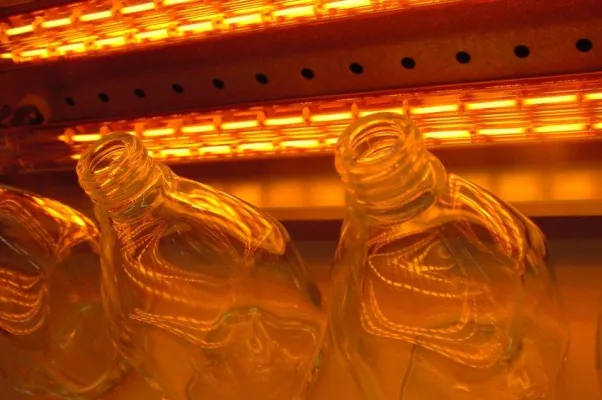
Getting Glass Annealing Right (Without the Heartbreak)
There is nothing worse than pulling a piece of lab-grade glassware out of the oven only to have it spontaneously shatter. It’s frustrating. It’s a waste of time. And usually, it happens because internal stresses didn’t get a chance to bleed off during cooling. To stop that from happening, you need more than just a heater that “gets hot.” You need a system that can grip the annealing point and not let go.
Why that 0.1°C difference is a big deal
Glass is picky. There is a tiny, narrow window between where it softens and where it starts to hold strain. If your infrared elements swing by even a few degrees, you’re basically inviting thermal gradients back into the mix. We aim for a temperature variance within 0.1°C. Why? Because it keeps the outer skin of the glass from cooling faster than the core. When you hit that level of stability, the residual stress vanishes. No stress, no shatter. Simple as that.
Getting the heat inside the glass
Standard heaters won’t cut it here. We use short-wave or medium-wave IR elements because they actually penetrate the glass wall. Instead of the heat just sitting on the surface, it soaks deep into the bulk of the vessel. It’s a volumetric heat, which is exactly what you want. But here is the catch: you have to pair those elements with a PID controller that reacts instantly. If your sensor lags, the IR element will overshoot the target. And just like that, you’ve ruined the whole batch.
The hardware reality check
If you want 0.1°C stability, you can’t just flip a switch and hope for the best. It takes some real investment in power regulation. You’ll need SCR (Silicon Controlled Rectifier) power controllers to smoothly modulate the voltage going to the lamps. One more thing to watch out for: these high-precision setups throw off a lot of waste heat around the housing. You’ve got to get your ventilation or water-cooling jackets right. If you don’t, the ambient heat will mess with your sensor readings, and all that precision goes right out the window.