
Getting the Heat Right: Custom IR Peaks for Glass Annealing
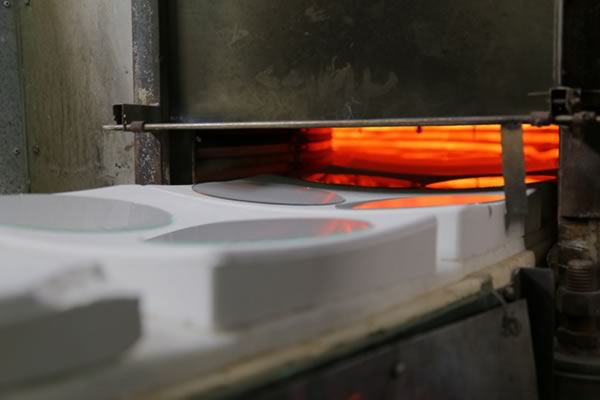
Here is the problem with standard infrared heaters: they’re kind of a “one size fits all” deal. But if you’re working with specialty glass—the kind with specific additives or dopants—that doesn’t work. The glass only wants to absorb energy at certain wavelengths. If the heater isn’t hitting those exact spots, the heat just bounces off the surface. It’s like trying to unlock a door with the wrong key. You can push as hard as you want, but you aren’t getting in. Making the physics work for you Most heaters you buy off a shelf throw out a broad wave of energy. For scientific-grade annealing, we do things differently. We tweak the filament and the quartz envelope to shift that curve. We align the heater’s peak wavelength with the chemistry of your glass. Why? Because you need the heat to actually sink in. If you don’t, you end up with a “cold core.” That’s a nightmare scenario where the outside of your bottle looks perfect, but the center is still under tension. One wrong move and the whole thing snaps. Dealing with additives Every additive changes the game. If you’re using rare-earth elements or heavy metal oxides, a standard short-wave lamp is basically wasting electricity. We look at your material’s spectral data and tune the emitter to target the actual molecular vibrations of those additives. It’s a much more direct way to get the job done. The trade-off (because there’s always one) Now, here is the catch. When we narrow the emission band to hit that one specific peak, you lose some of the total raw power you’d get from a broad-spectrum lamp. It’s a bit of a balancing act. You might need more heater banks or a bump in wattage to keep your production speeds where they need to be. Just make sure your power supply can handle the extra load if you’re planning on fast cycle times. The good news? We build these to fit right into your existing furnace footprint. As long as your electricals can take the hit, they just slide right in.