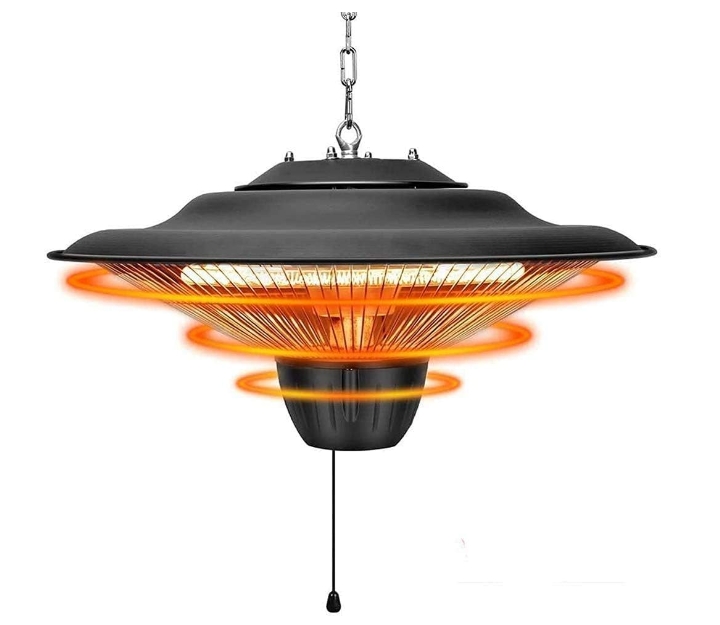
Keeping Your Eyes Safe While Staying Warm
Most infrared heaters just blast a huge range of radiation into a room. That’s fine for a warehouse, but for a bathroom ceiling heater? Not so much. We have to get rid of that harsh blue and ultraviolet light. If we don’t, you’re looking at retinal strain or even permanent damage. And for babies with eyes that are still developing, that’s a huge risk we can’t take. How we fix the light Here’s the thing: we protect your eyes by messing with the filament and the quartz tube. Standard short-wave lamps throw out high-energy photons that cause that annoying, blinding glare. We shift that energy toward the long-wave infrared spectrum instead. This means the heat goes straight into your skin and the surfaces around you, rather than hitting your eyes. By blocking out that 380nm to 450nm range, we keep the cozy warmth but kill the blinding light. The secret is in the coating The quartz glass isn’t just there to hold everything together. We use special coatings that bounce visible light back into the filament. It does two things at once. It cranks up the internal temperature so the heat feels denser, and it keeps the outside from being too bright. You end up with a soft, warm glow instead of a piercing white light that feels like a surgical theater. The trade-off Now, filtering the light isn’t free. When we block those wavelengths to keep your eyes safe, we lose a bit of brightness. You won’t get the same blinding intensity as a standard halogen bulb. But honestly? In a bathroom, that’s a fair trade. You’re looking for warmth, not a spotlight. One last tip: if you’re wiring these into a ceiling array, make sure your voltage regulators are steady. If the voltage spikes, the filament gets too hot, which can push the light back into that visible, harsh range. Keep your specs tight, and the light stays soft.